Fake Delivery Text Message? What to Do Before You Click
Fake Delivery Text Message? What to Do Before You Click
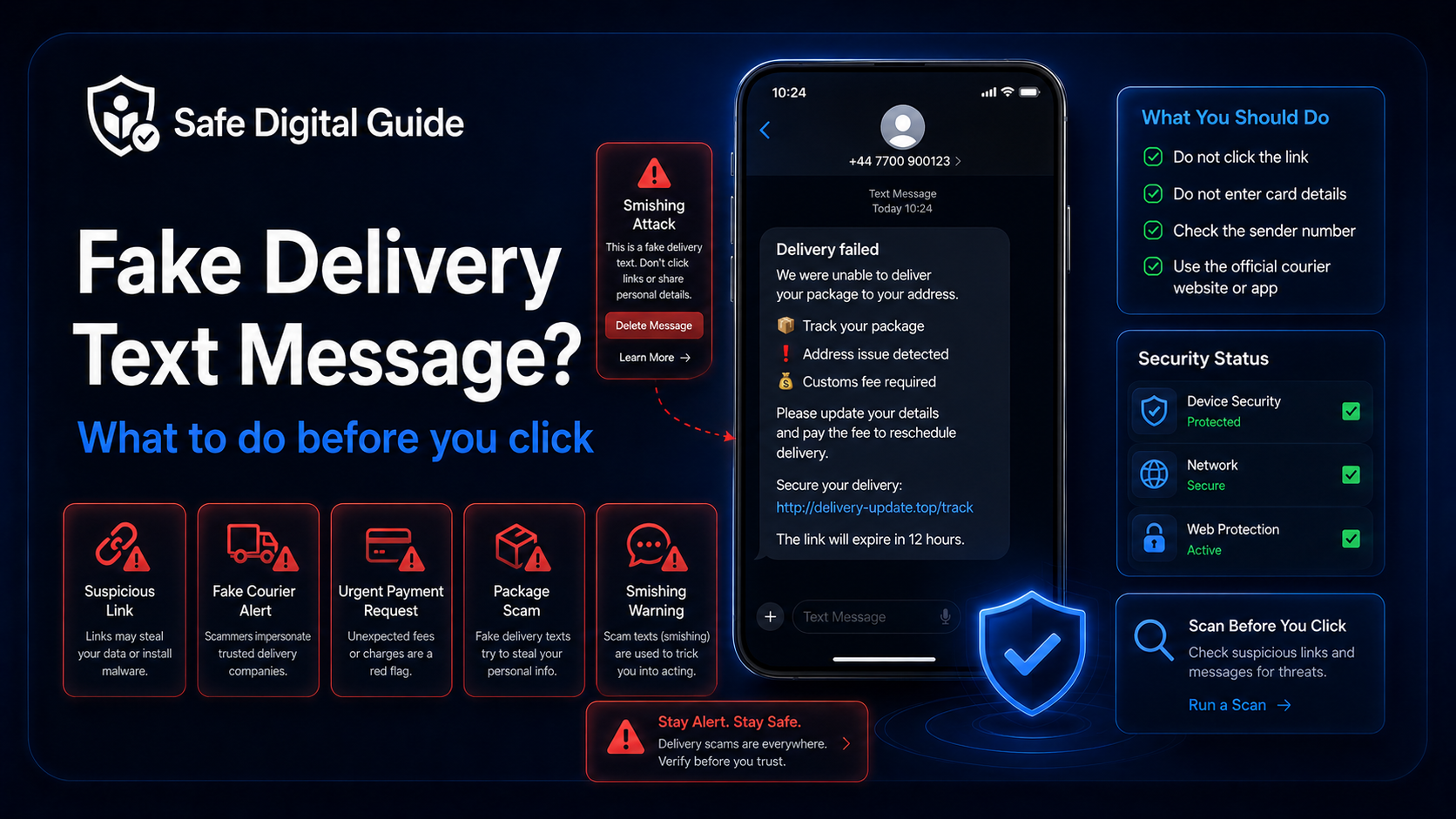
A fake delivery text message can pretend to be from a courier, postal service, online store, or customs office. It may claim that your package failed, your address is incomplete, or you must pay a small fee before delivery.
This guide explains how to spot a fake delivery text message, what warning signs to check, what not to click, and what to do if you already opened the link or entered personal information.
Quick Answer: Fake Delivery Text Message
If you receive a fake delivery text message, do not click the link, do not enter card details, and do not provide personal information. Check the delivery directly through the official courier website or app using a real tracking number, not the link in the text.
Do not rush
Delivery scams often use urgency. They may say your package will be returned, blocked, delayed, or cancelled unless you act immediately.
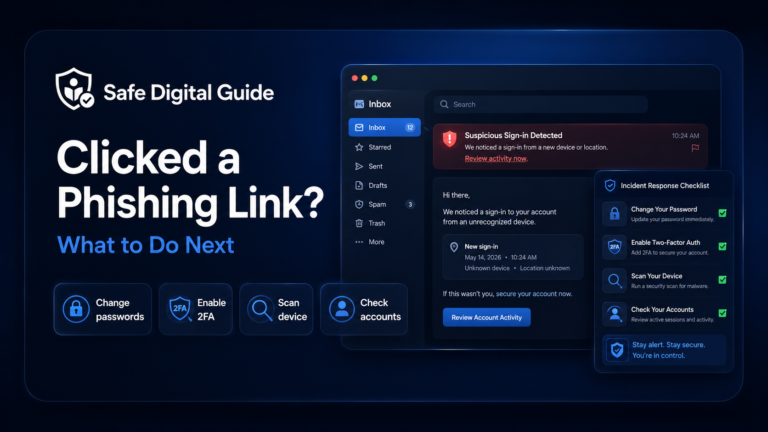
If you already clicked the link, read our guide on what to do if you clicked a phishing link.
Fake Delivery Text Message Checklist
Use this checklist before trusting any package, courier, customs, or delivery SMS.
1. Do Not Click the Delivery Link
The safest first step with a fake delivery text message is simple: do not click the link. Scam links can send you to fake tracking pages, fake courier websites, fake customs pages, or fake payment forms.
Unsafe actions
- Clicking the link in the text.
- Entering your card details.
- Typing your full address into a suspicious form.
- Downloading an app from the link.
- Replying with personal information.
Safer actions
- Open the courier website manually.
- Use the official courier app.
- Check the tracking number separately.
- Look at your original order confirmation.
- Contact the seller through the real platform.
A real delivery update should not force you to enter sensitive information through a random link in a text message.
2. Check the Sender Number
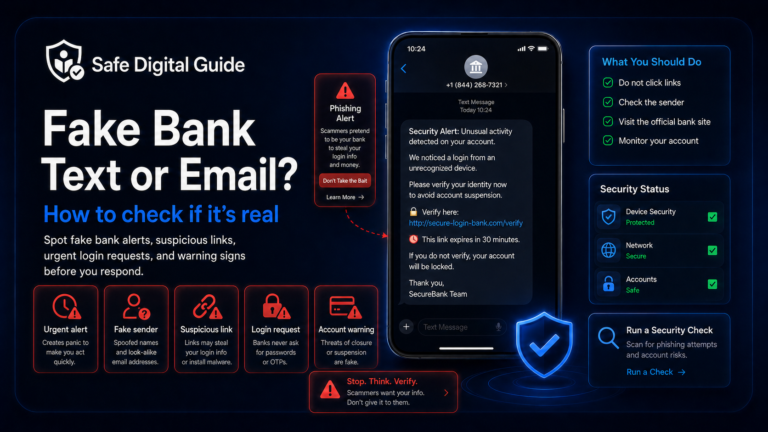
A fake delivery text message often comes from a random mobile number, unknown sender, or strange international number. However, scammers can sometimes make messages look more official than they really are.
Important
The sender name alone does not prove the message is real. Always check the link, the request, and the delivery details before trusting it.
Be especially careful if the sender is unknown and the message asks you to click a link, pay a fee, update your address, or confirm delivery details.
3. Check the Link Before Opening It
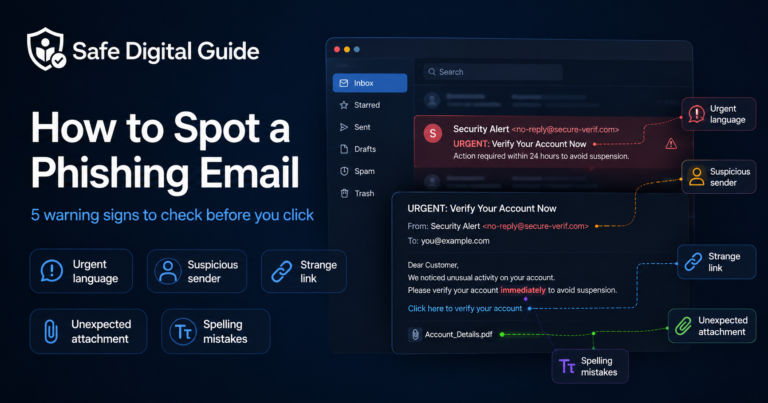
The link is one of the biggest warning signs in a fake delivery text message. Scam links often look similar to real courier websites, but they usually contain extra words, misspellings, or strange domains.
For a deeper checklist, read how to tell if a website is fake.
4. Be Careful With Small Delivery Fees
Many delivery scams ask for a small payment. The amount may look harmless, but the goal is often to steal your card details, billing address, phone number, or banking information.
If you already entered payment details, follow this guide: Gave Card Details to Scam Website? 7 Urgent Steps.
5. Verify the Tracking Number Separately
A real delivery message usually connects to a real tracking number. A fake delivery text message may include no tracking number, a fake one, or a vague package reference.
To verify it safely:
Find your order confirmation
Check the original email, app, marketplace, or store where you placed the order.
Copy the real tracking number
Use the tracking number from the official order page, not from a suspicious text link.
Open the courier website yourself
Type the official courier website manually or use the official app.
Check the delivery status there
If the real tracking page shows no issue, the text message may be fake.
6. Watch for Fake Customs or Address Problems
Delivery scams often use believable problems. They may claim there is a customs fee, unpaid tax, incomplete address, failed delivery, or package hold.
Common scam claims
- Your delivery failed.
- Your address is incomplete.
- You must pay a customs fee.
- Your package is on hold.
- Your parcel will be returned today.
How to check safely
- Use the official courier app.
- Check your real tracking number.
- Contact the seller through the real order page.
- Do not use the link in the text.
- Do not enter card details on a suspicious page.
The problem may sound realistic, but the link is usually the trap.
7. Do Not Download Delivery Apps From Text Links
Some delivery scams ask you to download an app to track your package, update your address, or confirm delivery. This can be dangerous, especially if the app is not from an official app store.
App download warning
Do not install apps from links in suspicious delivery messages. Only use official app stores and verify the developer before installing anything.
If you downloaded an app from a suspicious link, uninstall it, scan your device, check permissions, and monitor your accounts. If you are worried about phone safety, read Can a Phishing Link Hack My Phone?.
8. What to Do If You Clicked the Link
Clicking a fake delivery text message link does not always mean your phone or account is hacked. The risk depends on what happened after you clicked.
If you only opened the link
- Close the page.
- Do not enter information.
- Clear browser tabs if needed.
- Do not download anything.
- Watch for more scam messages.
If you entered information
- Change exposed passwords.
- Contact your bank if card details were entered.
- Check account activity.
- Enable two-factor authentication.
- Save evidence of the scam page.
For the full recovery checklist, use What to Do If You Clicked a Phishing Link.
9. What to Do If You Entered Card Details
If a fake delivery text message led you to a payment page and you entered card details, contact your bank or card provider immediately.
Do not wait to see if money disappears. Card details can be used later, even if nothing happens immediately.
10. How to Report a Fake Delivery Text Message
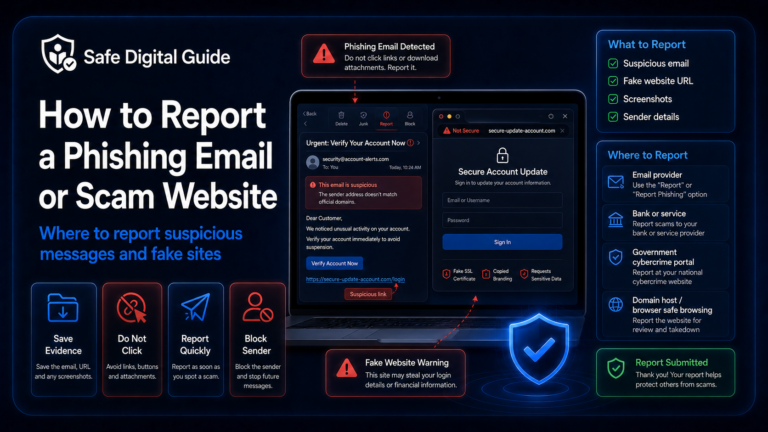
Reporting a fake delivery text message can help stop scam campaigns and protect other people. The best reporting option depends on your country, mobile provider, courier, and device.
- Forward the message to your mobile provider’s spam reporting number if available.
- Report the message as spam on your phone.
- Report the fake website to your browser or search engine.
- Report the scam to the courier being impersonated.
- Report financial loss to your bank or payment provider.
- Save screenshots and the suspicious URL before deleting it.
Useful evidence
Keep the sender number, message text, link, screenshots, date, time, and any payment or account activity connected to the scam.
How to Avoid Delivery Text Scams
The best way to avoid a fake delivery text message is to build a habit of checking delivery updates separately.
Use official apps
Track orders through the courier app, store app, or marketplace where you purchased the item.
Do not trust random links
Delivery links in unexpected texts should be treated carefully, especially if payment is requested.
Check the tracking number
Use the tracking number from your real order confirmation, not a suspicious text.
Protect payment details
Never enter card details on a page you reached from a suspicious delivery message.
Related Guides
These guides can help depending on what happened:
Helpful Official Resources
For more guidance, review phishing and scam advice from the FTC, phishing guidance from CISA, and online scam advice from the NCSC.
Frequently Asked Questions
What is a fake delivery text message?
A fake delivery text message is a scam SMS that pretends to be from a courier, postal service, online store, or customs office. It usually asks you to click a link, pay a fee, update your address, or enter personal information.
How do I know if a delivery text is fake?
Check the sender number, the link, the tracking number, the payment request, and the message tone. If it asks for urgent action through a suspicious link, treat it as unsafe.
Should I click a delivery text link?
Avoid clicking delivery links from unexpected texts. Open the courier website or app manually and check the tracking number through official channels.
What happens if I click a fake delivery text message?
If you only opened the link and did not enter information or download anything, the risk may be limited. If you entered card details, passwords, or personal information, take action immediately.
What if I paid a fake delivery fee?
Contact your bank or card provider immediately. Freeze or replace the card if needed, check transactions, and save evidence of the fake delivery text message and payment page.
Can a fake delivery text hack my phone?
A text message alone usually does not hack your phone. The risk increases if you click a malicious link, install an app, enter passwords, or give payment details.
Knowing how to handle a fake delivery text message can help you avoid stolen card details, phishing pages, fake tracking websites, and follow-up scams.
Final Safety Note
A fake delivery text message is designed to make you react quickly. Before you click, check the sender, link, tracking number, payment request, and official courier website.
The safest habit is simple: do not click delivery links or enter payment details from unexpected text messages. Verify the delivery through the official website, app, or order confirmation.